NATIONAL GRID GAS // BROOKLYN · STATEN ISLAND · S. QUEENS
HUBIncentives — last verified July 2026

National Grid rebates, listed by measure.

Every incentive category available to New York building owners — boilers, insulation, water heaters, air sealing, and controls — with the equipment specs each one requires. Hover any card for specifications.

REF. 01
$15,000+
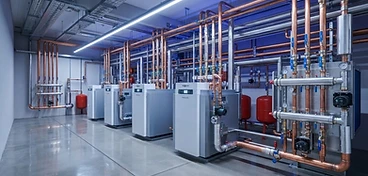
Pristine high-efficiency boiler room in a New York commercial building

High-Efficiency Boilers

Replace aging steam or hot-water boilers with condensing units at 90%+ AFUE and capture the largest single rebate National Grid offers to NYC buildings.

Check my eligibility

Quick Specs — Equipment Requirements

  • Condensing boiler, 90% AFUE or better
  • Natural gas primary heating fuel
  • Installed by an approved contractor
  • Pre-approval inspection required
REF. 02
Up to 80%

Attic & Ceiling Insulation

The Total Home Comfort Program covers up to 80% of professional attic insulation costs — the fastest payback of any envelope upgrade.

Check my eligibility

Quick Specs — Equipment Requirements

  • Minimum final R-value of R-38
  • Professional installation only
  • Proper ventilation maintained
  • Air sealing included where needed
REF. 03
Up to 60%

Wall Insulation

Dense-pack and cavity wall insulation rebates covering up to 60% of project costs for wood-framed and masonry walls.

Check my eligibility

Quick Specs — Equipment Requirements

  • R-20 or better in 2×6 framed walls
  • R-13 or better in 2×4 framed walls
  • Masonry & concrete wall options
  • Basement and crawl space walls eligible
REF. 04
Up to 40%

Air Sealing

Professional whole-building air leakage testing and sealing — the multiplier that makes every other upgrade perform.

Check my eligibility

Quick Specs — Equipment Requirements

  • Blower-door air leakage testing
  • Roof & wall penetration sealing
  • Window and door gap sealing
  • Recessed lighting fixture treatment
REF. 05
Up to $1,000

High-Efficiency Water Heaters

Indirect and high-efficiency gas water heaters qualify for direct rebates plus long-term fuel savings.

Check my eligibility

Quick Specs — Equipment Requirements

  • Indirect-fired or condensing units
  • 0.80+ Uniform Energy Factor
  • Active National Grid gas account
  • Licensed installer documentation
REF. 06
Up to $500
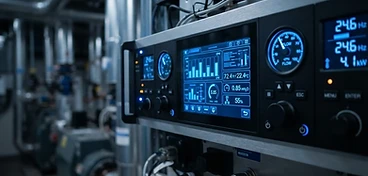
High-tech HVAC digital control panel in a modern building

Smart Thermostats & Controls

Building management controls, smart thermostats, and boiler reset controls that cut runtime without touching comfort.

Check my eligibility

Quick Specs — Equipment Requirements

  • ENERGY STAR certified devices
  • Outdoor reset controls eligible
  • Per-unit rebates for multifamily
  • Self-install or professional
REF. 07
Up to $2,000

High-Efficiency Furnaces

95%+ AFUE condensing furnaces with ECM blower motors qualify for equipment rebates across the National Grid service territory.

Check my eligibility

Quick Specs — Equipment Requirements

  • 95% AFUE minimum
  • ECM variable-speed blower
  • Proper sizing calculation required
  • Approved contractor installation
REF. 08
R-19 Rebates

Floor & Basement Insulation

Complete the building envelope — insulate floors over unconditioned space and basement walls to R-19 or better.

Check my eligibility

Quick Specs — Equipment Requirements

  • Minimum R-19 final value
  • Conditioned/unconditioned separations
  • Rim joist treatment included
  • NYC-specific basement standards

Measures stack — most buildings qualify for three or more rebates on a single project.

Request a free incentive review

ILLUSTRATIVE AMOUNTS FROM PUBLISHED PROGRAM RANGES, LAST VERIFIED JULY 2026 — RATES CHANGE BETWEEN CYCLES AND ARE CONFIRMED AT YOUR REVIEW. INDEPENDENT GUIDE, NOT AFFILIATED WITH NATIONAL GRID.

02Where the heat goes

Move your cursor across the building.

A real 7-story pre-war Brooklyn walk-up. The pointer works like a thermal camera — hover any measure to insulate that part of the building and watch the loss stop.

Roof & attic insulationBlown-in above the top floor · R-38Wall cavity insulationInjected · no demolitionWindow & door air sealingPerimeter sealing — not replacementBasement & rim joist sealingPerimeter, penetrations, shafts

FIG. 02 — 7-STORY PRE-WAR, BROOKLYN

03Scope of work

Three measures do almost all of the work.

Envelope work is what utility programs fund most aggressively, because it cuts gas demand permanently and cannot be undone by a tenant turning up a thermostat.

M-01

Roof & attic insulation

Blown-in above the top floor · target R-38 or better

In a walk-up or row building, the top-floor ceiling is where most heat leaves. Cellulose or fiberglass is blown in above the top floor from the attic or cockloft, so nothing inside the apartments is disturbed and no tenant has to move out. This is the single largest line item in an envelope project because incentives are paid on roof area — and it is the measure with the fastest payback.


M-02

Exterior wall insulation

Injected into the wall cavity · no demolition

Dense-pack insulation is injected into existing wall cavities through small access holes that are patched and sealed afterward. There is no gut work, no exposed framing, and no loss of interior square footage. Masonry and frame walls are handled differently, and a review determines which method the wall assembly can take.

M-03

Air sealing & pipe insulation

Basement, perimeter, common areas, distribution piping

Air sealing is the multiplier — it makes every other measure perform as specified. Basement rim joists, pipe and duct penetrations, stair and shaft openings, and the perimeter are sealed, then exposed heating pipe is insulated. On a steam system, insulating distribution piping alone recovers heat that was being dumped into an unconditioned basement.

Heating equipment — boilers, water heaters, and controls — carries its own separate incentives that stack on top of envelope work. See the full rebate catalog

05How the money works

This isn't a discount. It's a fund your building already pays into.

Utility efficiency incentives are the least understood money in New York real estate. They are not loans, not tax credits, and not a contractor promotion — they are ratepayer funds the utility is obligated to deploy.

Who funds it

Ratepayers, not taxpayers

New York gas utilities collect an efficiency charge on every gas bill and are required by the Public Service Commission to spend it on efficiency programs. If your building has a gas account, it has already been paying into this.

How it's paid

$4–$5 per sq ft

Envelope incentives are calculated on the area actually insulated — which is why roof area drives the number. Larger roofs and top-floor ceilings produce larger incentives.

What you pay

Often little or nothing

On many multifamily buildings the incentive covers most or all of the envelope scope. Where a gap remains, it is quoted before any work begins — there is no surprise balance.

Why timing matters

Budgets are annual

Program budgets are set per year and program rules and rates are revised between cycles. Work approved inside a cycle is funded at that cycle's rate.

NationalGridRebate.com is an independent information and referral service. It is not affiliated with, endorsed by, or operated by National Grid, Con Edison, or any government agency. National Grid is a trademark of its respective owner, used here for identification only.

09Borough intelligence

Which program applies depends on your borough.

Gas territory, not city limits, decides which utility funds the work. National Grid serves Brooklyn, Staten Island, and southern Queens; Con Edison serves Manhattan, the Bronx, and northern Queens.

Aerial view of Brooklyn brownstone rooftops

brooklyn.nyc

Brooklyn Rebates

Brooklyn is National Grid gas territory, and its brownstones, row houses, and pre-war walk-ups are among the most rebate-eligible buildings in New York. Utility programs cover most or all of professional insulation and air sealing for buildings on an active National Grid gas account.

Brooklyn rebate guide

New York City skyline viewed from Queens rooftops

queens.nyc

Queens Rebates

Queens is split between two gas utilities. National Grid serves the southern half of the borough and Con Edison the northern half, so the gas account — not the address alone — decides which program applies. Both utilities run comparable insulation and air sealing incentives.

Queens rebate guide

Low-rise residential rooftops on Staten Island

staten-island.nyc

Staten Island Rebates

Staten Island is entirely National Grid gas territory, which makes it one of the most straightforward boroughs for insulation incentives — there is no utility ambiguity to resolve before a project can move.

Staten Island rebate guide

Manhattan pre-war building facades at golden hour

manhattan.nyc

Manhattan Rebates

Manhattan is Con Edison gas territory, not National Grid. National Grid incentives do not apply to Manhattan buildings — but Con Edison runs comparable insulation and air sealing programs, and the envelope scope, paperwork, and economics work the same way.

Manhattan rebate guide

Pre-war multifamily buildings in the Bronx

bronx.nyc

The Bronx Rebates

The Bronx is Con Edison gas territory, so National Grid incentives do not apply here. Con Edison runs comparable multifamily insulation and air sealing programs, and the qualifying scope is effectively the same.

The Bronx rebate guide